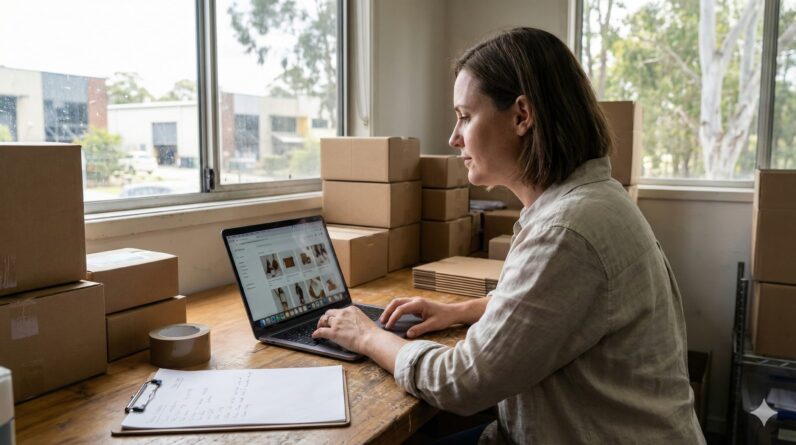
For many small business owners, the idea of selling online sounds appealing. An ecommerce website promises wider reach, sales outside business hours, and fewer limits tied to location. It also raises practical questions.
Is it worth the effort? Will customers actually buy online? Does it suit the type of business you run?
These are sensible questions. An ecommerce website can be a strong fit for some businesses and a frustrating distraction for others. The difference usually comes down to how customers prefer to buy, how the business operates day to day, and how much complexity the owner is willing to manage.
This article looks at ecommerce from a practical small business point of view. It explains what an ecommerce website really involves and helps you think through whether it suits your situation.
What An Ecommerce Website Actually Is
An ecommerce website is a site that allows customers to purchase products or services directly online. This includes browsing items, adding them to a cart, paying securely, and receiving confirmation without speaking to anyone.
For physical products, it often also includes stock tracking, shipping options, and order management. For digital products or bookings, it may handle downloads, access, or scheduling.
At a basic level, ecommerce replaces the counter and cash register with an online system.
Why Ecommerce Appeals to Small Businesses
The appeal of ecommerce is easy to understand.
An online store can operate around the clock. Customers can browse at night, on weekends, or during their lunch break. Orders can come in while you are busy doing other work.
For businesses in South East Queensland, ecommerce can also remove distance barriers. A business based in Toowoomba can sell to Brisbane or interstate without opening extra locations.
It also gives customers a sense of convenience. Many people are comfortable buying online and expect that option for certain products.
When Ecommerce Makes Sense
Products That Are Easy to Ship
Ecommerce works best for products that are simple to package and post.
Items that are:
- Lightweight
- Durable
- Standardised
Yend to suit online sales well.
For example, handmade goods, specialty food items with long shelf life, books, clothing, or hobby products often translate smoothly to ecommerce.
The fewer variables involved in delivery, the easier it is to manage.
Customers Who Already Buy Online
Some customer groups naturally expect online purchasing.
If your customers already:
- Compare prices online
- Order similar products from other sites
- Ask about shipping or online payment
Then ecommerce may align with their habits.
If customers frequently call or message asking if they can order online, that is often a strong signal.
Clear Pricing and Simple Choices
Ecommerce works best when pricing is straightforward.
Products with fixed prices, clear descriptions, and limited customisation are easier to sell online. Customers feel confident clicking “buy” when they understand exactly what they are getting.
Complex quotes, custom builds, or highly personalised services often suit direct conversation better than an online checkout.
When Ecommerce Can Be Challenging
Service Based Businesses
Many small businesses sell services rather than products.
Trades, consultants, clinics, and professionals often rely on discussion before a price is set. In these cases, ecommerce may add friction rather than reduce it.
Online booking or enquiry forms often suit service businesses better than full ecommerce systems.
Time and Admin Load
Running an ecommerce site involves ongoing work.
Orders need processing. Stock needs tracking. Customer emails need replies. Returns and delivery issues need handling.
For very small teams, this extra layer of admin can become overwhelming, especially if online sales are added on top of an already busy workload.
Thin Margins
If margins are tight, ecommerce fees matter.
Payment processors take a percentage. Shipping costs add up. Packaging materials are not free.
If profit per item is low, the volume needed to make ecommerce worthwhile may be higher than expected.
The Reality of Online Competition
An ecommerce website places your business in a wider marketplace.
Customers can compare prices quickly. They can switch tabs easily. Loyalty is often weaker online than in person.
This does not mean ecommerce is a race to the bottom. It does mean that differentiation matters. Clear product information, reliable delivery, and honest communication help build trust.
Small businesses often succeed online by being specific rather than trying to compete with large retailers on price alone.
Local Ecommerce Has Its Own Strengths
For South East Queensland businesses, local ecommerce can work differently to national or global stores.
Local delivery options, click and collect, or same day service can appeal to nearby customers. Clear local identity can also build trust.
Some customers prefer buying from businesses they recognise, even when shopping online.
Technology Is Only Part of the Picture
Building an ecommerce website is not just a technical task.
The technology can be set up fairly quickly. The ongoing success depends more on processes.
Questions worth considering include:
- How will orders be packed and sent?
- Who handles customer queries?
- How are stock levels updated?
- What happens if something goes wrong?
Clear answers make ecommerce more manageable.
Starting Small Is Often Smarter
Many businesses assume ecommerce needs to be large and complex from day one. That is rarely true.
Some start with:
- A small product range
- Limited delivery areas
- One payment method
This approach reduces risk and allows learning without pressure.
An ecommerce site can grow gradually as confidence and demand increase.
Customer Expectations Matter
Online customers expect clarity.
They look for:
- Accurate product descriptions
- Clear pricing
- Honest delivery times
- Easy contact options
When expectations are met, problems are rare. When they are not, dissatisfaction appears quickly.
Ecommerce does not remove the need for good customer service. It shifts where and how it happens.
Security and Trust From A Customer Viewpoint
Most customers do not understand online security in detail. They rely on signals.
They look for:
- Familiar payment methods
- Professional presentation
- Clear policies
If a site feels confusing or unfinished, trust drops.
This does not mean an ecommerce site needs to be perfect. It does need to feel considered and reliable.
Alternatives to Full Ecommerce
Not every business needs a full online store.
Some choose simpler options such as:
- Online enquiries with pricing guides
- Booking systems with deposits
- Manual invoicing after online requests
These options still offer convenience without the complexity of full ecommerce.
Thinking Long Term
An ecommerce website is not just a sales tool. It shapes how customers experience your business.
For some, it becomes a core part of operations. For others, it remains a side channel that supports in person or phone based sales.
Neither approach is right or wrong. The key is alignment with how you work and how customers prefer to buy.
A Practical Way to Decide
A useful question to ask is simple.
If you were a customer, would you want to buy this product or service online without speaking to anyone?
If the answer feels like yes, ecommerce may be a good fit. If the answer feels uncertain, a different online approach may suit better.
A Balanced View of Ecommerce
Ecommerce can open doors for small businesses. It can also create pressure if added without planning.
For South East Queensland businesses, the decision is rarely about trends. It is about fit.
When ecommerce supports how customers already behave and how the business operates, it can work quietly and effectively. When it fights those realities, it often becomes more effort than it is worth.
Taking the time to assess needs, capacity, and customer expectations leads to clearer decisions and fewer regrets.